Problems With Light Bulbs and Fixtures
- Light bulbs are burning out at a high rate. There can be various reasons for this, depending especially on how widespread the problem is in your home and whether the bulbs you buy are ideal for your situation
There are a variety of reasons that bulbs will burn out too soon. When the fixtures containing them cannot dissipate their heat (as mentioned above), it takes a toll on the bulbs. If the lights are ones that are left on a lot -- like outdoor lights left on all night -- then the bulbs may be living their full life but will simply have to be changed more often than others. But other things can contribute to early failure. Bulbs may be of cheap quality. Or there may be loose, arcing connections in the socket or in the wiring of the circuit.
- Some lights are flickering or blinking. This represents a Poor connection somewhere along the circuit. If the blink happens through much of the home, a Main wire connection could be the one having the trouble.
It is commonly at an outlet, light, or switch box, affecting part (not all) of one circuit.
If several circuits in the home suffer this simultaneously, a main wire connection at the panel, main (or submain) breaker, meter, or power company's line is probably compromised.
In all of these possibilities, some arcing is going on at the poor spot during the blinking. This produces a little heat or sometimes enough heat to affect the appearance of the connections or wires at that point -- usually only visible when covers are removed and the connections are inspected.
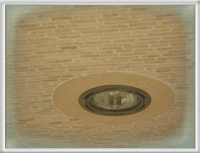
- A recessed light (flush to the ceiling) goes off sometimes and later works again. This is probably its built-in safety "cutout" keeping the light from overheating. It is telling you that the wrong style or wattage of bulb is being used or that ceiling-space insulation is too close around the light.
- Some lights get extra bright while others run dim.Bulbs may even be popping, and an electronic appliance or two may have died recently. This is a condition that will continue to be destructive to equipment in you home. It is from a Bad main neutral connection (or a bad neutral that is shared by just Two circuits).
Dead Outlet Problems
- A set of outlets or lights simply went dead. If you have reset any breakers or GFCIs (do you know How to?), you are probably left with a poor connection somewhere along a circuit.
- Half of an outlet works, but the other half doesn't always work. Even after years in your home, you may not be aware that one half may be energized by a wall switch. The other common cause is that use over time has loosened the hold that one half has on the cords you plug into it.
Tripping-Breaker Problems
- A circuit breaker or outlet has tripped off and won't reset. Don't be tempted too easily to blame the breaker or GFI. It is probably responding to a condition elsewhere on the circuit it is protecting.
- A circuit breaker often trips when the microwave or a hair dryer is used. If the tripping is not immediate, these high-wattage items (when running along with a few lights for awhile) are probably too much for the circuit. If these "overloads" can't be avoided by limiting the use of other things on the circuit, a new separate circuit for the heavy item is the only solution.
Common Electrical Problems With Switches
- A wall switch gets rather warm. Dimming switches do this -- it is normal for them when running 600 watts worth of bulbs (or less). Heat at a receptacle is another matter; a connection there needs immediate improvement.
- Two switches are supposed to control a set of lights but don't always work right. Occasionally a switch goes bad. More often this problem comes from someone having Replaced a switch wrongly.
Other Home Electrical Problems
- Our new clothes dryer won't heat up -- just like the old one wouldn't. Most likely there is a poor connection at the dryer's receptacle or at its circuit breaker. If you have a fusebox instead, one of the dryer's two fuses may be blown.
- Our electric bill seems to be quite a bit higher than normal. One culprit I have seen is a hot water pipe leaking. Even one drip at a time, significant money is leaking out of your wallet, assuming your water heater is electric. But there are many other possibilities.
Up